Solutions

Three ways to keep the load up.

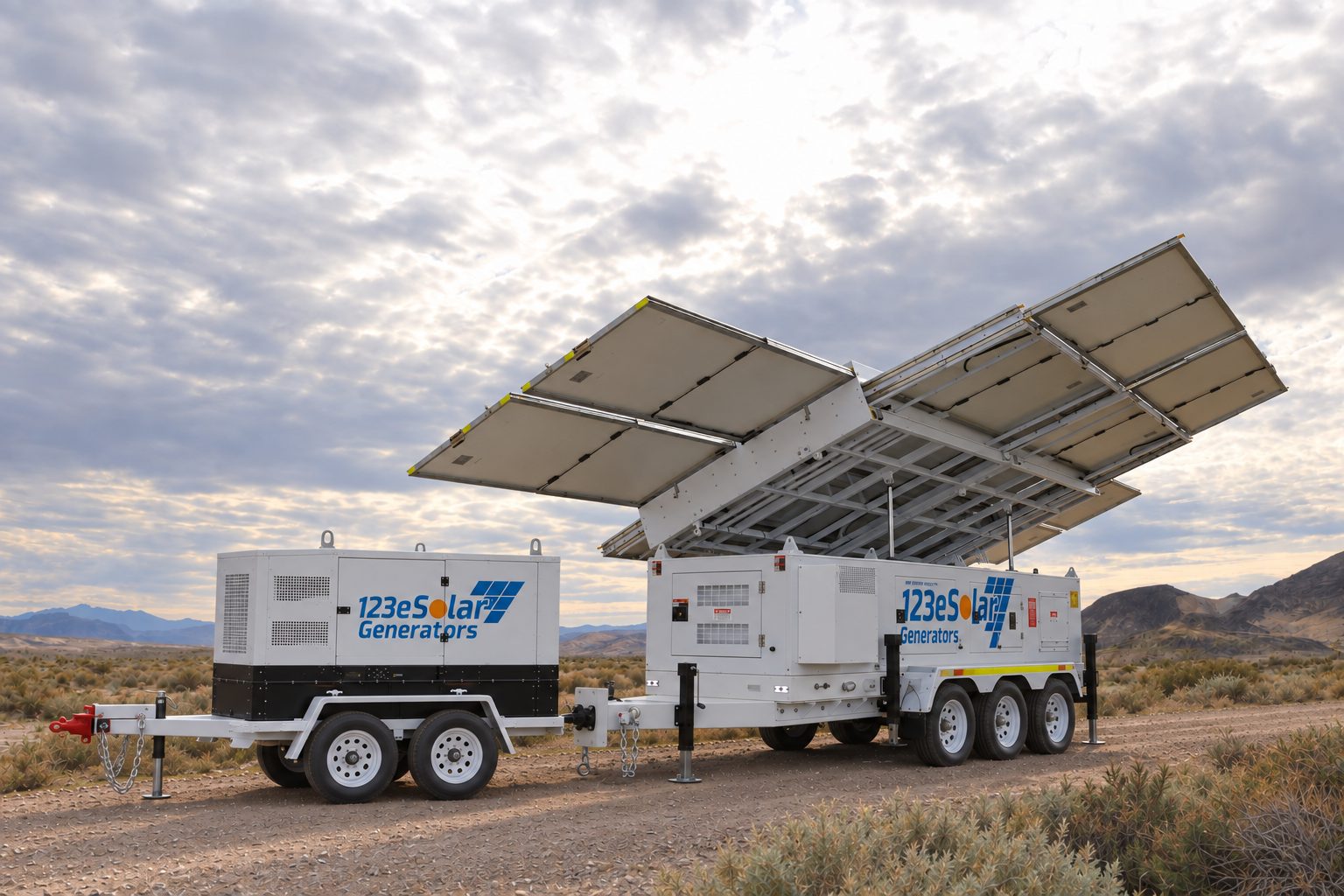
Three off-grid power systems, and which is right is decided by the site, not by the catalogue: what the load is, how long it must hold, and whether an engine can run there at all. Start here, then choose the configuration.

Choose the architecture first

Silence, continuity, or scale.

Every 123eSolar platform is built from the same coordinated architecture — generation, storage, controls, load delivery. What separates these three is where the backup comes from, and whether there is one.

How to decide

Answer four questions and the architecture picks itself.

Can an engine run here?

If noise, emissions or permitting say no, the answer is solar only — and the load has to sit under what the array makes in a day.

What happens if it stops?

If an outage is unacceptable, you need automatic backup on the machine. That is the Tri-Brid™ all-in-one.

How big is the load?

Past what a trailer-mounted engine carries, the generator has to be sized to the site instead. That is the modular pairing.

How long must it hold?

Required autonomy sets the battery, not the inverter. Every configuration publishes its stored energy and what it means in hours.

Start with the load, not the model number.

Give us the continuous and starting load, the schedule, the site and the continuity requirement. We size it against the systems we publish.

Size my system

These three are the architectures. For a load past what one platform carries, the same architecture goes further